When the whale sharks are in La Paz
Young whale sharks spend roughly November to April in the Bay of La Paz, feeding over the shallows near El Mogote. The months differ less in the sharks than in the wind and the water temperature. This guide goes through the season month by month and shows how to plan around a windy day.
The months the sharks spend in the bay
The tour listings agree on the core of the season. Mexico Travel Adventure gives November to April, while Eco Migrations' listing says the sharks arrive from mid-October.
The animals come for food. Plankton builds up over the shallow water near the long sandbar of El Mogote, across the bay from the Malecón, and our guide to El Mogote explains why the spot works so well.
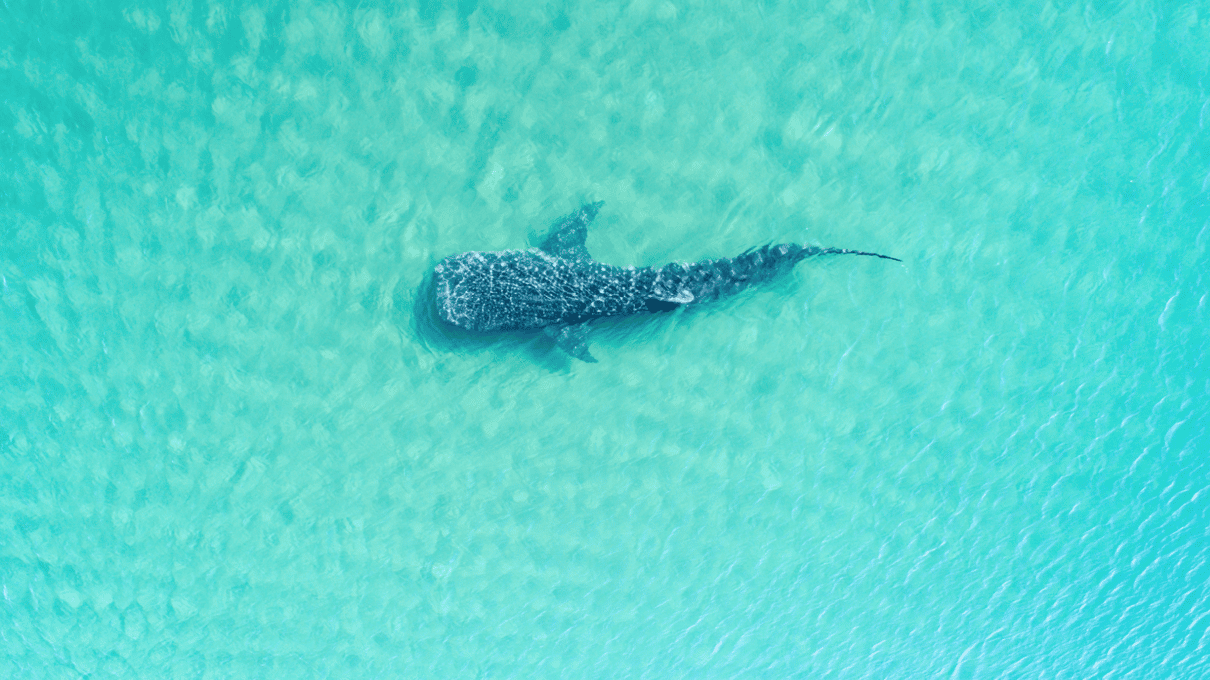
Most of the sharks in the bay are juveniles, often said to be roughly 4–8 meters (13–26 feet) long. Even a young whale shark looks enormous when it glides past a snorkeler at the surface.
They are wild animals that come and go as the food moves. No month and no operator can promise a sighting, and that holds in the middle of the season as much as at its edges.
Month by month
The table sums up what the listings and the usual weather pattern suggest. Treat it as a rough guide, because one year can run early or late compared with the next.
| Month | Whale sharks | Water | What to expect |
|---|---|---|---|
| May to September | Not in season | Warm | The operators we list do not run whale shark swims |
| October | Start of the season on some listings, from mid-month | Warm | Eco Migrations may run trips; check before you book |
| November | In season on all listings | Mild, cooling | A comfortable month to start the season in the water |
| December | In season | Cooling | Book ahead if you travel over the holidays |
| January | In season | Coolest, about 20–22 °C (68–72 °F) | Northerly wind is most likely to move a trip |
| February | In season | Coolest, about 20–22 °C (68–72 °F) | A full wetsuit helps; keep a spare morning |
| March | In season | Warming | Days grow longer, and water turns milder |
| April | End of the season | Warmer | Last weeks of trips; confirm the dates on the listing |
The water figures are rough midwinter values, not measurements for any one day. On the warmer edges of the season the bay feels noticeably kinder on a long swim.
Water and air in winter
Winter daytime highs in La Paz sit around 23–26 °C (73–79 °F), which feels pleasant on the Malecón. A fast panga ride in the morning feels far cooler, especially once you are wet.
In January and February the water drops to about 20–22 °C (68–72 °F). That is fine for a short swim in a wetsuit, but chilly in a swimsuit alone, so check what your tour supplies.
Eco Migrations hands out a full wetsuit, and Cabo Adventures lists wetsuits too. Our packing guide for the boat covers the windproof layer for the ride back.
Wind is the bigger variable
The sharks are usually the easy part of a winter trip. The harder part is El Norte, the northerly wind that blows down the Sea of Cortez in winter and can chop up the bay.
A strong blow can shorten a trip or cancel it outright, and the harbor master can close the port to small boats. On those days nobody goes out, whatever you paid.
Calm days are common between the windy spells, so a lost morning rarely means a lost trip. It does mean your plan needs some room, which the section below covers.
Why trips start in the morning
Most whale shark swims leave in the morning, and the sea is often calmer early before the breeze builds. Check the start time on your listing, since each operator sets its own.
Mexico Travel Adventure's three-hour swim from ~$123 leaves from the Muelle Fiscal on the Malecón. It scores 5.0 from 40+ reviews on GetYourGuide, and you are usually back in town well before lunch.
A short morning swim from the Malecón
Mexico Travel Adventure takes guests into the water in groups of five, with a marine biologist guide. Prices vary by date and partner, so compare both sites.
A morning trip also leaves the afternoon free for the beach or a walk along the bay. If you come from Los Cabos, the day looks very different, as our Cabo or La Paz guide explains.
Planning your week around the weather
Book the swim for the first or second day of your stay. If the wind cancels it, you still have mornings left to move it to, and free cancellation up to 24 hours before on GetYourGuide makes changes painless.
Ask your hotel or the operator about the wind the evening before as well. Local crews read the bay every morning and usually know first whether boats will be allowed out.
Watch the forecast for the northerly wind a day or two ahead. When a calm spell shows up, that is the morning to take, even if it means shuffling other plans.
Our guide to cancelled trips and refunds covers what operators usually offer. For prices and kit side by side, see what each swim costs.
Outside the season
From roughly May to September the whale sharks leave the bay, and the tours we compare stop running swims. A trip in those months will not include them.
If your dates fall at the very edge, in October or late April, confirm on the listing that trips are running. Then read the nine rules for the water before your morning on the boat.