Nine rules for swimming with whale sharks in La Paz
Whale shark swims in La Paz take place inside a protected, regulated area of the bay, and the guides brief you before anyone gets wet. The rules are short and easy to follow. Knowing them in advance means less waiting on the boat and a calmer swim for you and the shark.
Why a whale shark swim comes with rules
The sharks feed close to the surface over the shallows near El Mogote, which is what makes snorkeling with them possible. It also puts them close to boat traffic, and some sharks in the bay carry propeller scars.
The area is protected, and boats take turns near each shark. Only a few swimmers go in with a guide at once, and Mexico Travel Adventure puts guests in the water in groups of five.
Rules like these are common wherever people swim with whale sharks. In La Paz they matter more than usual, because the feeding area lies close to a busy town with plenty of boats.
The list below covers the usual rules. Your guides will tell you the details for your boat, and their word counts for more than anything written here.
Rules for the boat and the entry
1. Listen to the briefing and stay with your guide
Every swim starts with a short briefing on the boat. In the water, the guide decides where you swim and when you climb out, and keeping close to them keeps the group tidy around the shark.
2. Slide in quietly
Lower yourself from the side of the panga instead of jumping. Splashing and loud kicks can startle the shark, which then dives out of sight and ends the encounter for everyone.
3. Wait for your turn
Boats rotate and groups take short turns, so the time in the water is limited for each group. The wait on deck is part of the system that keeps each shark from being crowded.
Rules for distance and contact
4. Keep a few meters away
The usual guideline is about 2 meters (6.5 feet) from the body and more from the tail. A tail stroke from even a young shark is powerful, and the distance also keeps you out of its path.
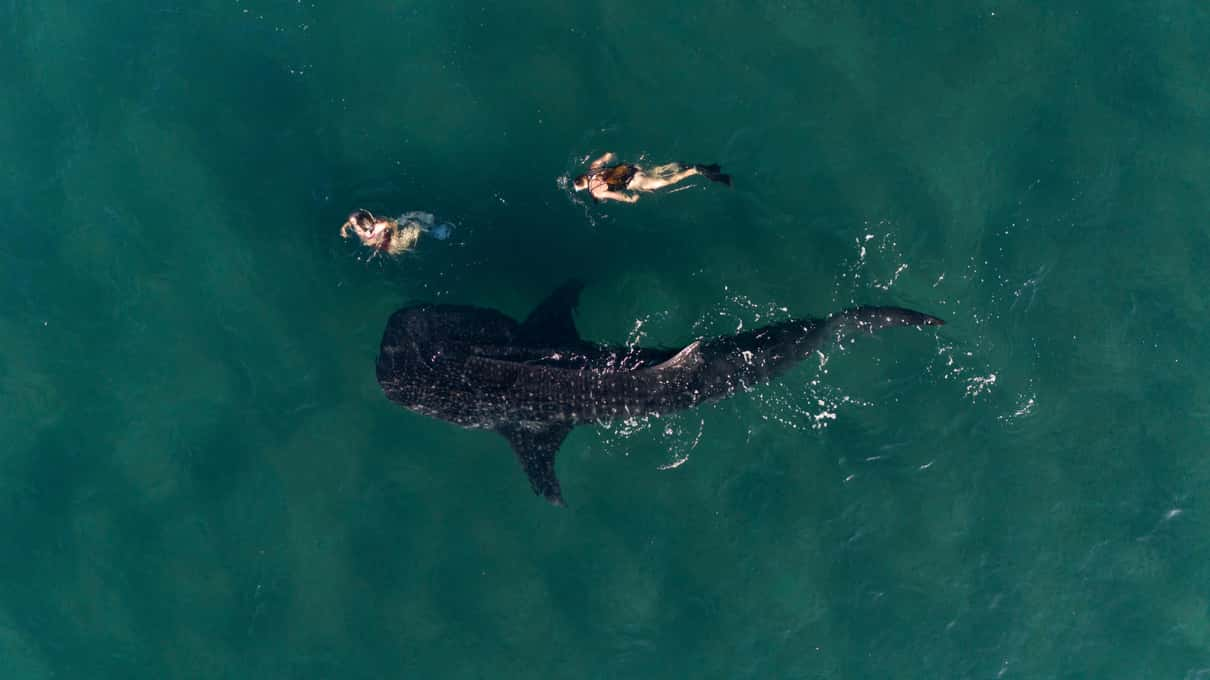
5. Never touch or ride the shark
A whale shark has a protective coating on its skin that a hand can damage. Grabbing a fin or riding along stresses the animal, and guides take it seriously.
6. Stay at the surface
Swim alongside the shark rather than diving down on top of it. Scuba gear is not used on these swims, and a snorkeler above the shark's back blocks its way up to the plankton.
Rules for cameras, gear and skin
7. No flash
Flash photography is not allowed near the sharks. Daylight at the surface is enough for a phone or action camera, and our guide to filming the sharks shows how to get a clear clip within the rules.
8. Wear the wetsuit or life vest if asked
Guides may ask you to wear a wetsuit or a life vest. Both add buoyancy, which keeps you floating calmly at the surface instead of kicking hard near the shark.
9. Use reef-safe sunscreen or none
Ordinary sunscreen leaves a film on the water in a protected area. Use a reef-safe one or skip it and cover up with a rash guard, as our packing list for the trip suggests.
How a turn in the water works
Once the crew spots a shark, the panga moves into position and waits for its turn. The guide then calls a small group to the side, and you slip in together.
You swim beside the shark as it feeds, keeping your distance and letting it set the pace. When the guide signals, you climb back aboard and the next group goes in.
On Mexico Travel Adventure's swim from ~$123, groups of five mean everyone gets time near the shark. The tour scores 5.0 from 50+ reviews on Viator.
Turns in groups of five with a biologist
Mexico Travel Adventure's three-hour swim from the Muelle Fiscal, with a marine biologist guide who briefs you on the rules. Compare both partners for your date.
On a busy morning you might go in more than once if the sharks stay near the surface. Whale sharks are wild, though, and no tour can promise how many turns you get or that you see one at all.
What the rules mean for nervous swimmers
Short turns and a guide beside you make the swim less daunting than it sounds. The water over El Mogote is shallow and usually calmer than open sea.
Most first-timers find the hardest part is the moment of sliding off the boat. After that, floating face down in a wetsuit while a huge spotted shape passes below feels surprisingly easy.
If you are unsure of your swimming, read our guide for kids and first-timers. Our El Mogote guide explains why the sharks feed so close to town.
Rules that make the trip better
The rules can feel strict when a shark is right there. They are the reason the sharks keep returning to a bay full of visitors, and the reason operators are allowed to run swims at all.
Guides watch the group closely and will call back anyone who drifts too near. Follow the call at once, and the next turn will usually come round sooner.
A calm shark that keeps feeding gives you a longer, closer look than one that dives away. Check when the sharks are in the bay and what each swim costs before you book.