What to bring on a La Paz whale shark boat trip
A whale shark swim in La Paz is a short morning on a small open boat, with a few spells in the water off El Mogote. The operators lend most of the gear, so your bag stays light. What you add decides how warm and comfortable you are on the ride back.
What the boats hand out
All three tours on this site supply the snorkeling basics, so nobody needs to fly in with a mask and fins. The differences sit in the wetsuit and the extras, and they shape what you pack.
Eco Migrations' small-group swim from ~$187 kits you out at its office in the center of town. You get a complete snorkel set and a full wetsuit there, before the short boat ride out to the whale shark area.
Cabo Adventures lists wetsuits and life jackets on top of the snorkel gear for its day trip from Los Cabos. Mexico Travel Adventure names snorkel gear and drinking water but no wetsuit, and its GetYourGuide page suggests you bring a towel and a jacket.
If a wetsuit matters to you, check the listing before you book or ask the operator. Our price comparison of the three swims sets their kit lists side by side with what each one charges.
Wear the swimsuit, carry the rest
There is rarely a proper changing room on a panga. Put your swimsuit on at the hotel, under shorts and a T-shirt you can pull off quickly once the guide calls your group into the water.
Bring a towel of your own even if the boat carries a few. A light microfiber one dries fast and folds small. A second dry T-shirt for the ride home feels very welcome after a wet hour.
Flip-flops or sandals you can kick off are easier than trainers. You step from the pier or the beach straight into the boat, and wet shoes on your feet for the trip back are not much fun.
A warm layer for the ride back
La Paz winters are mild, with daytime highs of roughly 23–26 °C (73–79 °F). Out on the bay early in the day, sitting wet on a fast boat, it feels much cooler than those numbers suggest.
The water itself runs at about 20–23 °C (68–73 °F) in midwinter. A wetsuit makes that comfortable for a short swim, but your body loses heat quickly once you climb out into a breeze.
Pack a windproof jacket or a light fleece to throw on over damp skin. Visitors who come in January or February, the coolest stretch, tend to be glad of it. Our month-by-month guide to the whale shark season covers the water and weather in more detail.
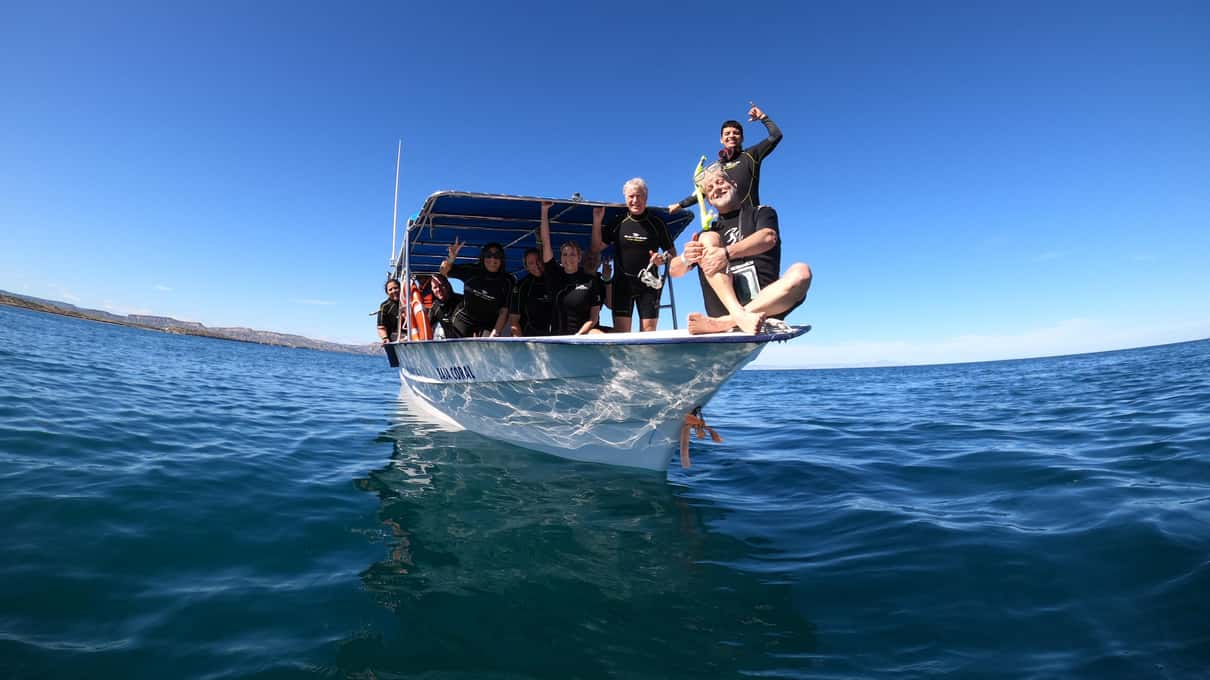
Sun cover that does not harm the sharks
The Baja sun is strong even in winter, and on the water it reflects back up at you. A long-sleeved rash guard protects your back while you float face down, which is where most people burn.
If you use sunscreen, pick a reef-safe one and put it on well before the trip so it soaks in. Guides often ask swimmers to go easy on lotion, since a film on the water is bad for the sharks and the bay. The rules for swimming beside the sharks explain why.
A hat with a strap and sunglasses help on the boat between swims. Bring a strap or a cord for both, because a fast panga loses loose hats to the wind within minutes.
Wetsuit included, biologist on board
Eco Migrations starts at its office in central La Paz, where you get a full wetsuit and snorkel kit, then runs about 4 hours with a bilingual marine biologist, from ~$187. GetYourGuide shows 4.9 from 40+ reviews.
Phone, cash and a dry bag
A small dry bag keeps your phone and keys safe from the spray that comes over the bow, with room left for a spare layer. A roll-top bag of about ten liters is plenty and fits under a bench.
Carry some cash in pesos or dollars. Eco Migrations does not include crew tips, and on Cabo Adventures they are optional. You may also want a coffee or a taxi to the pier afterwards.
If you want footage of the shark, a small action camera or a phone sealed in a waterproof pouch does the job. Our guide to filming whale sharks without a dive camera covers the settings and the angles.
For queasy stomachs
The bay is often calm, but a breeze can raise a short chop, and a small boat moves with every wave. If you are prone to seasickness, take a tablet before you board rather than once you feel ill.
Eat a light breakfast and bring water. Neither of the La Paz swims lists a meal, and only the Cabo Adventures day trip includes lunch, a taco meal with soft drinks after the swim.
What to leave behind
A GetYourGuide listing for these swims says drones are not allowed, so leave yours at the hotel. Scuba gear has no place here either, since the swims are snorkel-only at the surface.
Your own mask is the one piece worth bringing if it fits you well. A familiar mask leaks less and fogs less, which helps nervous swimmers most. Parents can read our notes on kids and first-time snorkelers for more on that.
A packing list for the morning
- Swimsuit, worn under your clothes
- Towel and a dry T-shirt for the ride back
- Windproof jacket or light fleece
- Rash guard or reef-safe sunscreen
- Hat with a strap and sunglasses
- Small dry bag
- Cash for tips and a taxi
- Motion-sickness tablets if you need them
- Phone in a waterproof pouch, or an action camera
- Your own mask, if you have one that fits
- Water and a light snack
Everything on the list fits in one small backpack. Whale sharks are wild and never guaranteed, so a bag packed the night before also makes it easy to go out again on a spare morning if the first trip comes back empty.